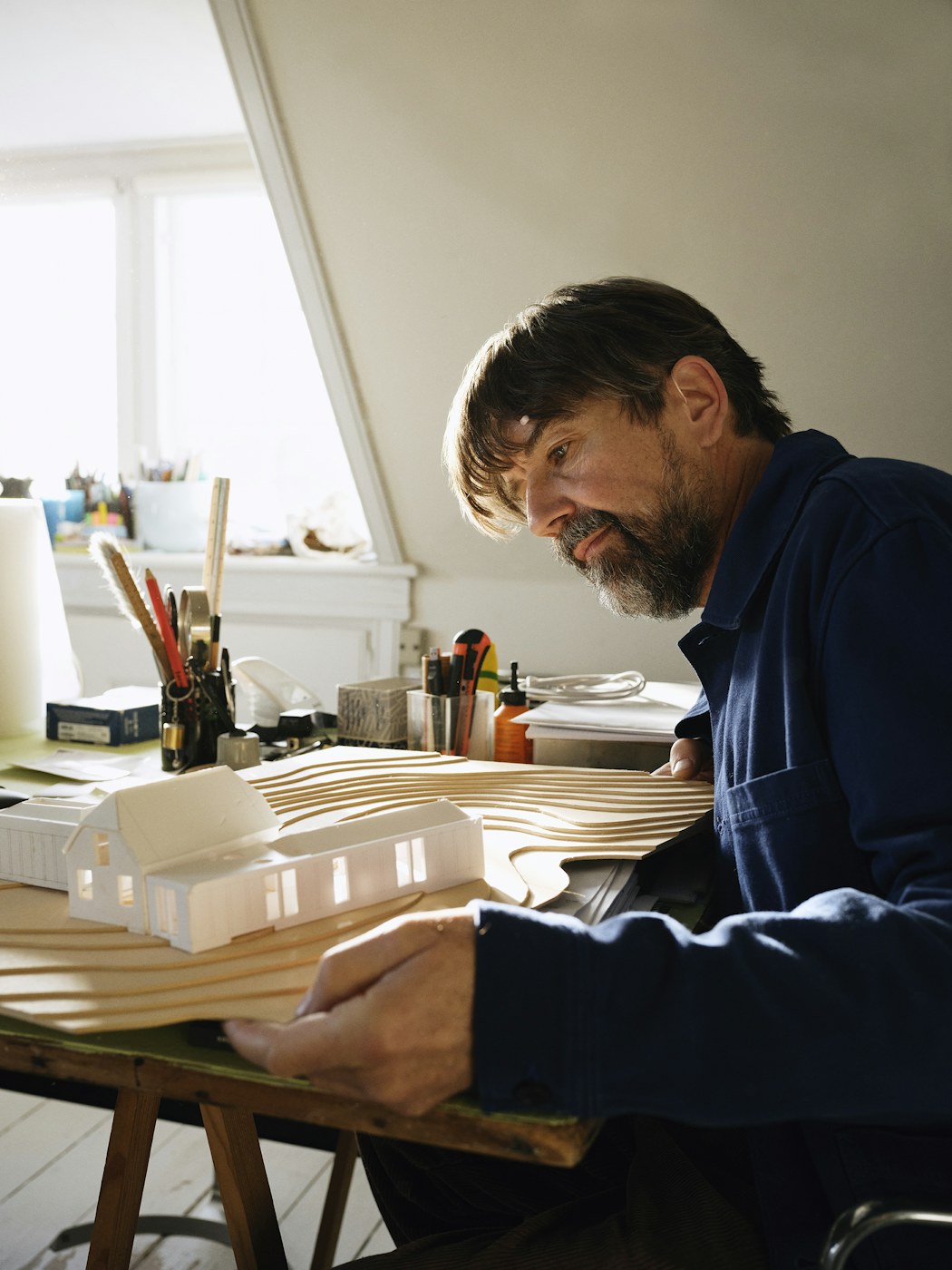
A model is most useful before it looks finished. It gives uncertainty a physical form that everyone around the table can discuss.
Thinking with the hands
Our first models are quick, often made from offcuts and card. Their roughness is useful. It makes them easy to change and difficult to mistake for a promise. A wall can move. A courtyard can widen. The conversation stays open.
One model, one question
We rarely ask a single model to explain everything. One tests the site’s topography. Another studies the depth of a window. A larger fragment explores how two materials meet. The scale is chosen to make a particular question easier to see.
A shared language
Physical models create a point of reference between people with different kinds of expertise. A craftsperson may notice an awkward junction. A client may understand a route for the first time. These readings are part of the design, not interruptions to it.
Back to the drawing
The model does not replace the drawing or the digital environment. It moves between them. Each medium reveals a different kind of problem; together they help keep the work grounded in dimensions, materials and the experience of moving through space.
Notes from an independent practice.
Copenhagen · London · Kyoto